
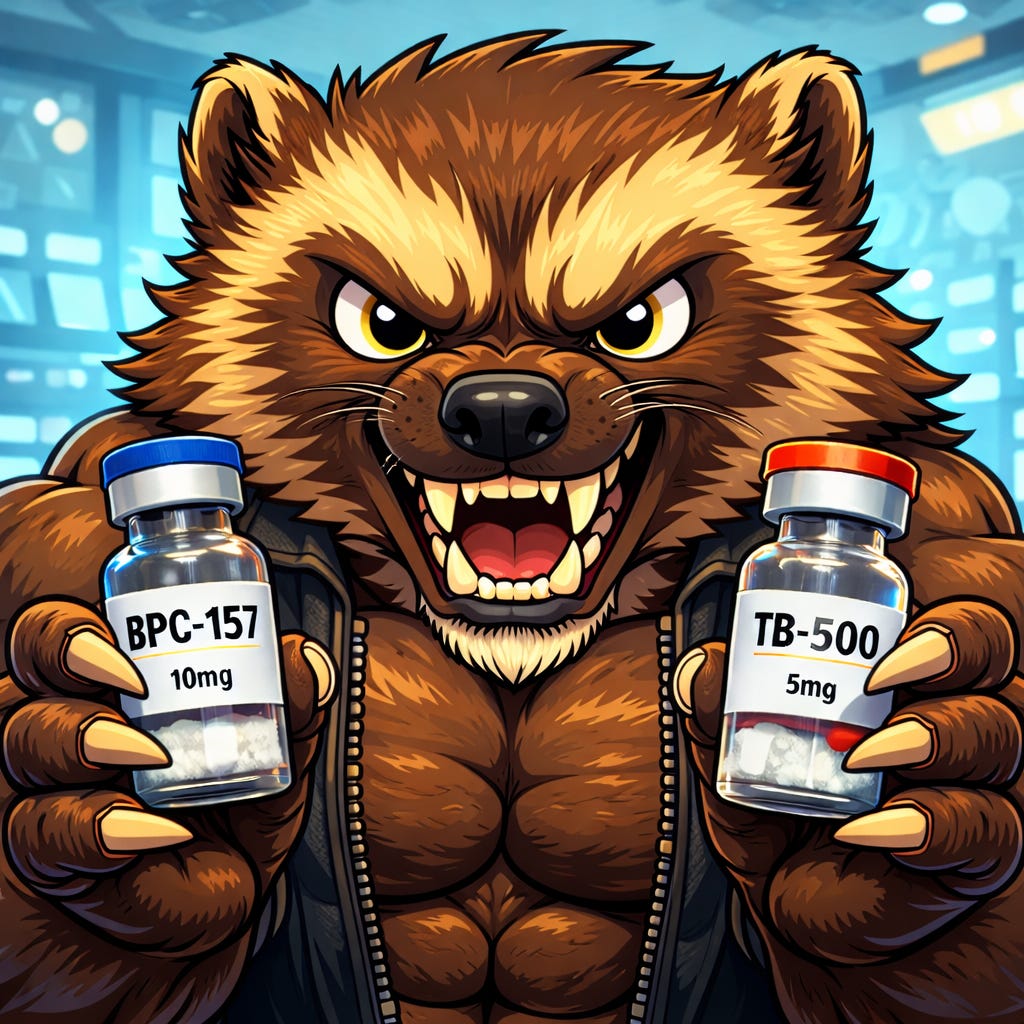
The Wolverine Stack: Your Complete Guide to BPC-157 & TB-500 for Injury Healing

What if your body could heal like Wolverine?
That’s the promise behind “The Wolverine Stack” — a combination of BPC-157 and TB-500 that’s become one of the most popular protocols for accelerating injury recovery in the research community.
Whether you’re dealing with a nagging tendon issue, recovering from surgery, or just want to understand what these peptides actually do, this guide breaks down everything you need to know.
What Are These Peptides?
BPC-157 (Body Protection Compound-157)
A synthetic peptide of 15 amino acids, originally derived from a protective protein found in stomach acid.
What it does:
Promotes angiogenesis (new blood vessel growth) — crucial because tendons/ligaments have poor blood supply
Stimulates fibroblast activity — the cells that produce collagen and repair connective tissue
Modulates nitric oxide production — improves blood flow to injured areas
Reduces inflammatory cytokines
Where it shines: Localized healing. BPC-157 works best at or near the injury site — tendons, ligaments, muscles, and gut.
TB-500 (Thymosin Beta-4 Fragment)
A synthetic fragment of Thymosin Beta-4, a naturally occurring protein found throughout your body.
What it does:
Regulates actin — critical for cell movement and structure
Promotes cell migration — helps healing cells travel where needed
Enhances angiogenesis
Reduces fibrotic scarring — tissue heals more completely
Improves flexibility
Where it shines: Systemic healing. TB-500 distributes throughout your entire body regardless of administration site.
Why Stack Them?
BPC-157 and TB-500 work through different but complementary mechanisms.
BPC-157 = The Initiator & Protector The architect who designs the blueprint and protects the construction site.
TB-500 = The Executor & Builder The construction crew that physically builds and rebuilds the structure.
When combined: More complete healing cascade, both local AND systemic support, potentially faster recovery, and better tissue quality with less scarring.
The Two Main Protocols
There are two dominant approaches researchers use:
PROTOCOL 1: The 1:1 Balanced Ratio
Dosing:
BPC-157: 250mcg, 1-2x per day
TB-500: 250mcg, 1-2x per day
Duration: 4-8 weeks
Example Schedule:
Morning: 250mcg BPC-157 + 250mcg TB-500 Evening (optional): 250mcg BPC-157 + 250mcg TB-500
Pros:
Simple and easy to follow
Consistent peptide levels
Lower TB-500 dosage = fewer potential side effects
Cost-effective
Good for beginners
Cons:
May be less aggressive for severe injuries
Lower TB-500 tissue saturation
Requires daily administration
PROTOCOL 2: The High-Dose TB-500 Loading Protocol
Dosing:
TB-500: 2.0-2.5mg, 2x per week (4-5mg weekly total)
BPC-157: 250-500mcg daily
Duration: 4-6 weeks loading, then maintenance
Example Schedule:
Monday: 2mg TB-500 + 250mcg BPC-157 Tuesday-Wednesday: 250mcg BPC-157 Thursday: 2mg TB-500 + 250mcg BPC-157 Friday-Sunday: 250mcg BPC-157
Maintenance (after loading): 2mg TB-500 every 1-2 weeks as needed
Pros:
Achieves tissue saturation faster
More aggressive for stubborn injuries
Fewer TB-500 administrations per week
Clear loading/maintenance structure
Cons:
Higher cost
Potentially more side effects during loading
More complex protocol
Which Protocol Should You Choose?
Choose Protocol 1 if:
Mild to moderate injury
New to peptides
Prefer simplicity
Budget-conscious
Choose Protocol 2 if:
Serious/acute injury
Recovering from surgery
Lower doses haven’t worked
Experienced with peptides
Administration Basics
Subcutaneous (SubQ): Most common. Administered into belly fat, outer thigh, or love handles. Best for systemic healing.
Intramuscular (IM): Near the injury site. Some prefer this for localized BPC-157 effects.
Key Point: TB-500 is systemic — administration site doesn’t matter. BPC-157 may have enhanced local effects when administered near the injury.
Risks & Safety Considerations
This section is critical. Please read carefully.
Reported Side Effects (usually mild)
Fatigue or lethargy (especially during TB-500 loading)
Mild headaches
Administration site irritation
Temporary nausea
Slight dizziness
Key Risks to Understand
1. The Angiogenesis Concern
Both peptides promote blood vessel growth — great for healing, but angiogenesis also feeds tumor growth. If undiagnosed cancer cells exist, these could theoretically accelerate their growth. No studies show these peptides cause cancer, but long-term human data doesn’t exist.
2. Regulatory Status
NOT FDA-approved for human use
BANNED by WADA for competitive athletes
FDA flagged BPC-157 as presenting “significant safety risks” in late 2023
3. Quality Control
Unregulated market = risk of contamination or underdosed products. Always use vendors with third-party testing and recent COAs.
Who Should Avoid These Peptides
🚫 Anyone with active cancer or cancer history 🚫 Pre-existing vascular conditions 🚫 Competitive athletes subject to drug testing 🚫 Pregnant or breastfeeding women
Realistic Timeline
Week 1: Minimal visible change. Some reduced inflammation/pain. Possible fatigue.
Week 2: Pain reduction often noticeable. Improved mobility for some.
Week 3-4: Most noticeable healing acceleration. Stalled injuries start progressing.
Week 6-8: Significant improvement for moderate injuries.
Week 8-12: Full healing for many acute injuries. Chronic conditions continuing to improve.
Results depend on injury severity, age, nutrition, sleep, and lifestyle. Peptides support healing — they don’t replace proper rehab, nutrition, and rest.
Quick FAQs
Can I administer BPC-157 and TB-500 together? Many do. Some prefer separate administrations. Both approaches are common.
Should I cycle off? Generally 4-8 weeks on, 2-4 weeks off. Max 90 consecutive days suggested.
Do I need to administer near the injury? For BPC-157, localized administration may enhance effects. TB-500 is systemic either way.
How do I know if my peptides are legit? Only buy from vendors with third-party testing and recent COAs (within 6 months).
Quick Reference
PROTOCOL 1 (1:1 Ratio)
BPC-157: 250mcg, 1-2x daily
TB-500: 250mcg, 1-2x daily
Best For: Mild/moderate injuries, beginners
PROTOCOL 2 (High-Dose Loading)
BPC-157: 250-500mcg daily
TB-500: 2-2.5mg, 2x weekly
Best For: Severe injuries, experienced users
Final Thoughts
The Wolverine Stack is a tool that may support your body’s natural healing processes. The research is promising but still emerging. Anyone considering these peptides needs to do their own research, understand the risks, source from quality vendors, and not neglect traditional recovery methods.
Heal smart. Heal complete.
Disclaimer: This information is for educational and research purposes only. These peptides are not FDA-approved for human use and are intended for research use only. This guide does not constitute medical advice. Always do your own research and consult with a qualified healthcare provider.
Questions? Drop them in the comments.
— Derek